
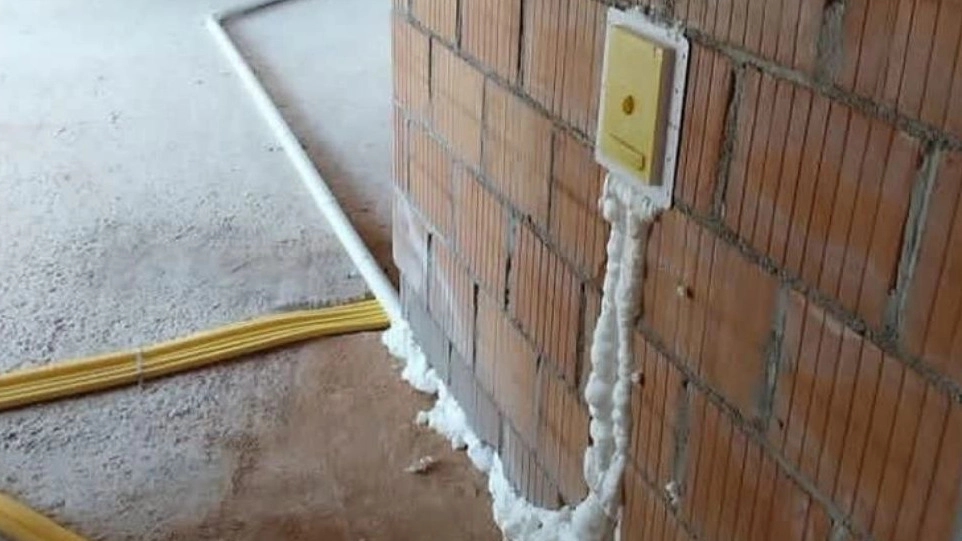
With the expansion of modern construction and increased attention to the comfort of residents, the use of advanced cleaning equipment has become one of the important parts of building design. A central vacuum cleaner is one of the systems that can simplify the cleaning process in houses, villas, residential complexes and office spaces. In the meantime, execution of central sweep piping in Karaj is of particular importance due to the variety of residential buildings, the expansion of villa construction and the increasing attention to the building's functional equipment.
In the central vacuum cleaner system, the motor and the main tank are installed in a certain place of the building and will be connected to the suction sockets in different parts through a network of pipes. By connecting a special hose to each socket, the user can clean the desired space, without the need to move the main device in different rooms or floors.
However, the proper functioning of this system is not only dependent on the choice of engine. The basic design of the pipe path, choosing the right diameter, using compatible connections, correct placement of outlets and preventing air leakage, all have an impact on the final quality of the work. For this reason, the implementation of the central sweep piping in Karaj should be done according to the building plan, architectural conditions and the needs of the users.
Vivaan production can be considered in the process of reviewing products and solutions related to construction equipment. Conscious selection of equipment and paying attention to the quality of construction, compatibility of parts and technical principles of implementation help to create a practical and durable system. In this article, we will review all the steps of implementing the central sweep piping, from route design to installation of outlets, final testing and maintenance of the system.
What is a central vacuum cleaner and why does it need basic plumbing?
The central vacuum cleaner is a fixed cleaning system whose main components are installed in a certain point of the building. This system usually consists of a vacuum motor, a dust collection tank, a filter, air transfer pipes, suction sockets and a special hose.
When using the device, the hose is connected to one of the suction sockets and the air flow directs the pollutants through the piping network towards the central tank. As a result, the user can clean different parts of the building without carrying the engine and tank.
In this structure, piping plays the role of the main route of air and particles transmission. If the pipes are not selected or installed correctly, the possibility of suction loss, air leakage, blockage and difficulty of repairs increases.
The implementation of central vacuum piping in Karaj should be planned in such a way that the air transfer path is connected to the suction sockets and the main device with the least unnecessary complexity. In this process, in addition to the quality of the pipes, the type of connections, the number of branches and coordination with other building facilities are important.
The advantages of implementing the central sweep piping in Karaj
Ease of cleaning in large buildings
In large buildings, it can be difficult to carry a regular vacuum cleaner from one room to another or move it between floors. The central system reduces the need to move the main device by using fixed suction sockets.
This feature is useful for villas, multi-storey houses and buildings with a large number of rooms. Proper plumbing design also makes it easier to access different parts of the building.
Reduce engine noise in the living space
In the central system, the motor is installed in a certain place and is not next to the user during cleaning. For this reason, if you choose the right place to install the device, the sound of the engine can be felt less in the main rooms.
Of course, the amount of noise reduction depends on the type of engine, installation location, vibration control and architectural conditions of the building.
The possibility of designing according to the building plan
One of the important advantages of the central system is the ability to design the piping network based on the architectural plan. The location of the sockets, the route of the pipes and the position of the motor can be specified according to the needs of the building.
In newly built buildings, this allows for better coordination with other facilities and will prevent unnecessary demolitions in later stages.
Better dust management
In the central vacuum cleaner, the dust is transferred to the main tank through the piping network. If you choose the right device and use a compatible filter, managing the collected pollution can be easier.
However, the amount of control of suspended particles depends on the type of filter, the design of the device and the location of its air outlet. Therefore, the technical specifications of the system should be checked before choosing.
The steps of implementing the central sweep piping in Karaj
The execution of central sweep piping includes several important steps that must be done in order and in compliance with technical principles. Detailed planning at each stage reduces the possibility of problems after installation.
First step: checking the building plan
Before starting the work, the architectural plan and the condition of the building facilities are checked. The number of floors, size, location of rooms, corridors, staircases and spaces that can be used for installing equipment must be known.
Also, the paths of electric cables, water pipes, ventilation channels and other facilities should be checked so that the central sweep network does not interfere with them.
In the buildings under construction, coordination with the facility engineer and executive team is very important. In ready-made buildings, the possibility of pipes passing through the false ceiling, ducts or existing routes should be evaluated.
Second step: determining the installation location of the central engine
The installation location of the engine and tank must be determined based on the building plan and device specifications. This place can be a facility space, a suitable warehouse or another part of the building that meets the necessary conditions.
The selected location should allow access to empty the tank, check filters and perform periodic services. Also, proper ventilation, safe access to electricity and control of sound and vibration transmission should be considered.
In the implementation of the central sweep piping in Karaj, the selection of the engine location should be done according to the length of the piping routes. The paths must be in harmony with the technical specifications of the device in order to maintain the suction performance in different parts of the building.
The third step: designing the piping route
Designing the pipe route is one of the most sensitive stages of system implementation. Its purpose is to connect the suction sockets to the central motor through a suitable network and the air flow moves without unnecessary resistance.
At this stage, the length of the paths, the number of branches, the number of knees and the junction of different sections are checked. Complex paths or improper connections may increase airflow resistance and affect system performance.
Also, the possibility of accessing important parts of the network should be considered in case of need for repair or removal of obstruction. Basic design is not only limited to shortening the path; But safety, operability and coordination with the structure of the building are also important.
The fourth step: choosing the right pipes and fittings
Pipes and connections must be compatible with the type of device and technical specifications of the system. Using improper parts may cause air leakage, blockage or reduced suction performance.
Diameter, material, strength and connection method should be considered in choosing pipes. Also, connections must be installed in such a way that they have sufficient strength against normal conditions of use and normal changes in the building.
Using standard and compatible parts helps to reduce implementation problems and make system maintenance easier.
The fifth step: determining the location of the suction sockets
Suction outlets should be installed in places that provide adequate coverage for different parts of the building. Their number and location depends on the size, shape of the plan, the number of rooms and the length of the hose.
At this stage, the distance from fixed furniture, the position of doors and corridors and how to access the corners of the room should be checked. Its purpose is that the user can clean a suitable area by connecting the hose to each socket.
In multi-story buildings, the placement of outlets should be evaluated for each floor separately. In villas, it is necessary to check large spaces and communication routes more carefully.
The sixth stage: implementation of piping and installation of fittings
After the design is completed, the pipe installation operation begins. The pipes must be placed in the designated paths and the connections must be installed according to the technical instructions.
At this stage, it is very important to prevent construction dust, plaster, cement and other foreign materials from entering the pipes. The entry of these materials may block the network and cause problems during startup.
Also, open pipe openings must be protected during construction operations. Before covering the paths with a wall or ceiling, it is better to check the condition of the installation and connections so that possible problems can be solved at the same stage.
The seventh step: installing sockets and connecting to the network
After the implementation of the piping, the suction sockets are installed in the predicted places. These sockets should be checked in terms of strength, connection quality and coordination with the final wall covering.
If special control systems are used, their connection should also be done according to the manufacturer's instructions. At this stage, any air leaks or connection defects should be identified and corrected.
Eighth step: connecting the engine and starting the system
After completing the piping network and installing the outlets, the central motor, the tank and the filters are installed in the designated place. Then the final connections and control parts will be checked.
During the start-up phase, the engine performance and suction of all outlets should be tested. If there is an air leak or blockage in any part of the suction reduction system, it must be fixed before final delivery.
At the end, the user is explained how to use the device, how to empty the tank and how to maintain the filters.
Important points in the design of central sweep piping
Choosing the right pipe diameter
The diameter of the pipe must be compatible with the technical specifications of the device and the design of the network. Choosing the wrong diameter can affect the speed of air flow and suction performance.
For this reason, the diameter of pipes should not be chosen based on general guesswork or experience. It is very important to follow the manufacturer's instructions and pay attention to the actual conditions of the project.
Avoiding unnecessary twists and turns
Unnecessary twists and inappropriate connections should be avoided in the design of the route. This issue can reduce the air flow resistance and help the system work better.
Of course, the final path must be in harmony with the architectural constraints and other facilities. The shortest path is not always the best choice; But the possibility of correct installation, access and service should also be considered.
Prevent air leakage
Improper connections and improper execution can cause air leaks. This problem may reduce suction performance and make the system difficult to use.
For this reason, checking the connections during installation and testing the network before delivery is considered one of the important steps in the implementation of central sweep piping in Karaj.
Protection of pipes during construction
During plastering, painting and other construction operations, there is a possibility of foreign materials entering the pipes. Protecting openings and checking paths before starting will help prevent blockages.
Documenting the piping route
Recording the route of the pipes before covering the walls and ceilings can be useful in the future. This information helps to identify the routes during repairs, reconstruction or possible changes of the building.
Implementation of central sweeping piping in new buildings
Newly built buildings have suitable conditions for designing and implementing a central vacuum system; Because the installation routes can still be programmed and the pipes can be installed before the final completion of the walls and ceilings.
In this situation, it is better to pay attention to the implementation of central sweep piping in Karaj from the early stages of facility design. Determining the location of the motor, the horizontal and vertical paths and the position of the sockets at this stage makes coordination with other parts of the building easier.
Also, it is better to check all the connections before covering the paths and prevent construction materials from entering the network. These measures reduce the possibility of the need for demolition or modifications after the completion of the building.
Implementation of central sweep piping in old buildings
In old buildings, the implementation of the central system needs more careful consideration. The limitation of the passage space of the pipes, the material of the walls, the condition of the roofs and the location of the existing facilities can affect the installation method.
In some projects, false ceiling, existing ducts or accessible paths can be used. In other cases, a part of the wall or ceiling may need to be modified.
Before starting the work, the possibility of implementing the network and the amount of changes needed should be determined. Proper planning can help reduce destruction and maintain the interior appearance of the building.
Factors affecting the quality of central sweep plumbing in Karaj
The final quality of the project depends on a set of technical and executive factors. One of the most important factors is the accuracy in the design of the pipe route. If the network is designed without considering the building plan, the possibility of interfering with other facilities or causing performance loss increases.
The capacity of the engine must also be compatible with the network conditions. Even if the plumbing is done correctly, choosing an inappropriate device may cause the system to perform poorly.
Finally, the final test and performance check of all outlets is very important. This step helps to identify possible problems before delivery and provides the basis for more reliable use of the device.
Vivaan's production role in choosing the right equipment
In construction projects, the quality of equipment and the compatibility of different components have a direct effect on the final performance of the system. This issue is also very important in the implementation of the central sweep piping; Because the pipes, connections, sockets and the engine must be in harmony with each other.
Vivaan production can be considered as one of the considered options in the process of recognizing products and solutions related to construction equipment. In order to make an informed choice, it is necessary to check the types of products that can be offered, their technical specifications, and their manufacturing quality.
When evaluating Vivaan products, it can be useful to pay attention to the following points:
- Check technical specifications: The material, dimensions, application and conditions of use of the products must match the project requirements.
- Pay attention to the quality of construction: The quality of raw materials and production precision can affect the durability and performance of the equipment.
- Compatibility of parts: Pipes and connections must be compatible with the device and network design.
- Check the installation manual: Clear technical information for correct implementation and Better maintenance of the equipment helps.
- Attention to support: Warranty conditions, access to parts and possibility of service should be checked before choosing.
Equipment selection should not be done only based on the brand name. Examining the actual specifications of the products and matching them with the needs of the building is a suitable approach to achieve the desired result.
Therefore, people who intend to implement central sweep piping in Karaj, can check Vivaan's production along with other related options and decide on the choice of equipment according to the technical specifications and needs of the project.
Correct maintenance of central vacuum piping
After system installation, basic maintenance plays an important role in maintaining network performance. One of the important actions is to periodically check the tank and filters based on the manufacturer's instructions.
If the suction is reduced, the hose, sockets and piping should be checked for blockages. The entry of inappropriate objects or building materials into the network can disrupt the air flow.
Also, it is necessary to check the system in time if you see unusual noises, leaks or a noticeable decrease in performance. Addressing small problems in the early stages can prevent more serious disorders.
Recording the piping route and maintaining the execution plan is also useful for future repairs. This information helps to identify the location of the pipes and better plan for possible changes.
summary
The implementation of central vacuum plumbing in Karaj is one of the important steps in creating an efficient cleaning system for buildings and villas. The correct design of the pipe path, the selection of compatible connections, the basic placement of the suction sockets and the proper installation of the motor play an important role in the final performance of the system.
To achieve the desired result, it is necessary to check the building plan first and then design the piping routes according to the architecture and other facilities. Choosing the right pipes and connections, protecting the network during construction and final testing of all outlets are also essential steps of the project.
In new buildings, early planning can allow for more orderly execution and reduced demolition. In old buildings, accessible routes and architectural restrictions should also be evaluated before starting work.
Finally, the quality of execution, compatibility of equipment and basic maintenance are three important factors in maintaining the performance of the system. Vivaan production can also be considered in the process of reviewing products related to construction equipment; provided that the technical specifications and real quality of the products are adapted to the needs of the project. By observing these principles, you can design a suitable network for the central vacuum and benefit from easier cleaning and more reliable performance in the building.